Day #16: Louth – 32kms Downstream
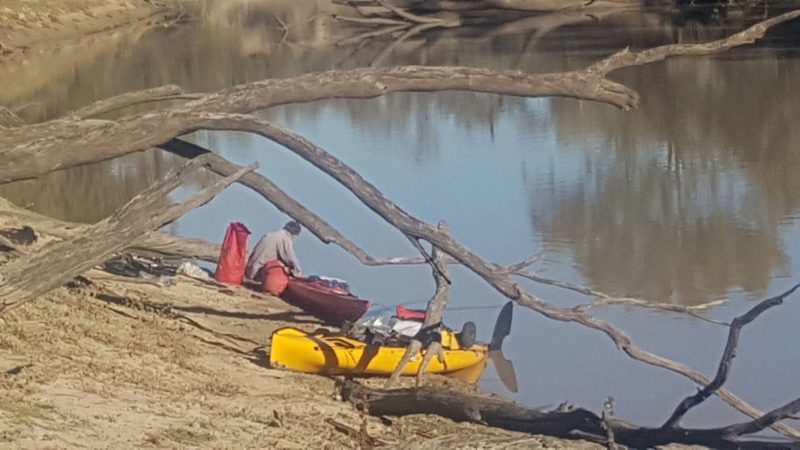
We left Louth with a feeling that we were traveling into remote country. 170km to Tilpa which we could knock over in 4-5 days. The first weir after Louth is 33km downstream and out plan was to cross it and camp on the first nice spot we saw downstream. After a couple of days off the first day back in the boats is usually tough going, maybe because we are fully loaded with food and water as much as general laziness.
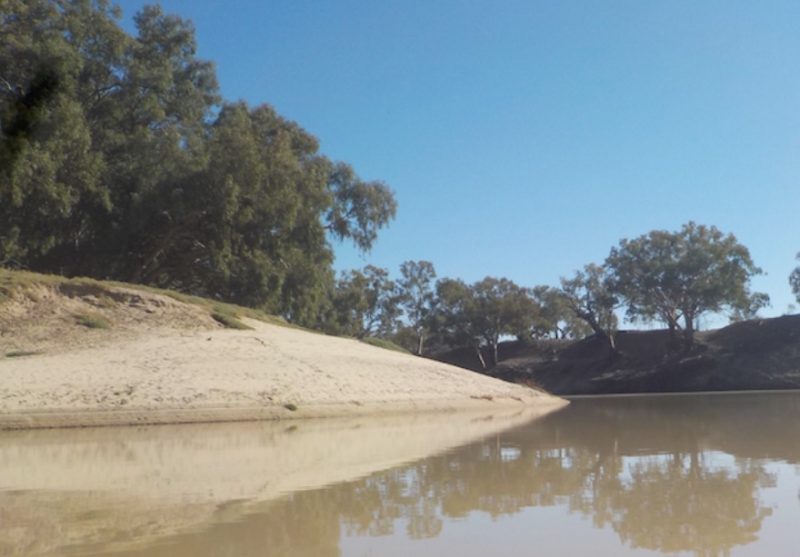
The banks and river conditions immediately below Louth were excellent. Beautiful campsites all the way with the now standard soft white sand beaches seen on most bends. But wildlife and even ferals were scarce through this section. Maybe the goats had been rounded up and sold as there was a lot of interest and talk along the way of the high prices goats were attracting. A semi trailer load was worth upwards of $100,000 and all for animals which had until recently been considered pests. We didn’t have any guns with us and W. left his compound bow in Bourke but even so the landholders we met along the way were quick to request that the goats on their property be left alone.
The weir downstream of Louth was unlike any we’d seen so far. It was low and the water level was almost exactly the same downstream as upstream. It was easy to cross and we could walk the boats through the gaps in the broken rocks used in construction. The channel along the left bank would be navigable in water levels above the 300ML a day flow we experienced.

Day #17: 32kms – 64kms Downstream of Louth
At about the 40km mark, 7km past the weir we passed Trilby Station which is a popular and well known destination for the caravans of grey nomads who beat their way up and down the Darling on their way up North or while returning from the centre. We remembered the very attractive wife (with a particularly seductive voice!) of one of the gentlemen we’d had a drink with at Shindy’s inviting us to drop in and have morning tea as they’d be camped there. We were focussed on paddling when we made it to Trilby and there were plenty of vans parked along the banks so we kept going not sure how we would land the boats and search the property to take up the invitation.
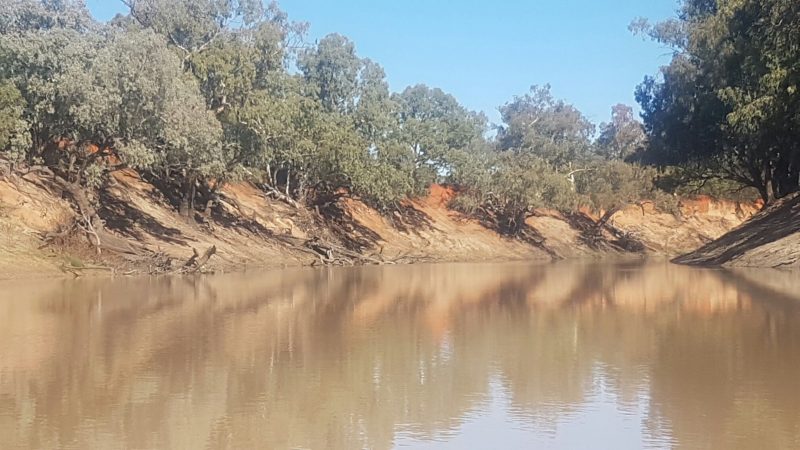
The current was consistent through this section as the river was relatively shallow though still wide and steep banked. The further we travelled we again started seeing large numbers of goats and more emu swimming the river. The paddling was easy with long sweeping bends and a definite current line nearly all the way which was easy to find and take advantage of.
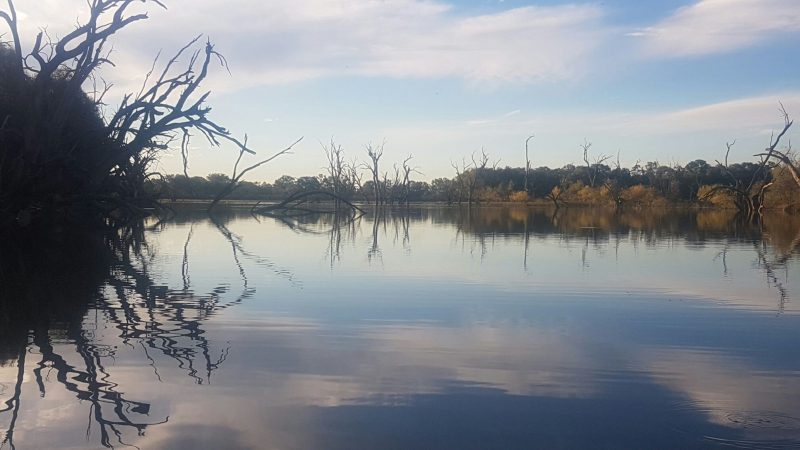
The paddling for the day was much the same as upstream and eventually we found an excellent campsite surrounded by huge fallen redgum limbs all seasoned and ready to burn. It was cold that night, maybe the coldest night we’d seen so far with the temperature well below zero. Again the boats were covered in ice when we woke the next morning and it was not until the sun was above the tree line that things became more pleasant. Overnight the river had risen about 4cm, apparently the result of rain which had fallen on the NSW/Qld border a couple of weeks earlier catching up with us. We were grateful for any assistance we received from the increased flow.

Day #18: 64kms – 101kms Downstream of Louth
There are a few farm houses on the river through this section but otherwise it was relatively quiet. Very few birds, and not much wildlife. We camped almost dead on the 100km mark downstream of Louth on a beautiful sandy beach which were again so common we now expected to see them on every reach of the river.
D. cast out his line as soon as we arrived and almost immediately something started playing with the bait. Jerking the line hoping to jag whatever it was which refused to take the bait and run D. reeled in a large blue yabbie. It was sacrificed as bait. Within a few more minutes W.’s line was hit hard by a big fish swallowing some of the fresh yabbie bait. After a short fight the 50lb braided line parted for now apparent reason. There must have been a nick somewhere on the line. W. was not impressed as the wide open sandy beach and shallow river bed meant landing the fish was almost guaranteed. Furious, W. stripped the rest of the line from the reel and replaced it but there was nothing but carp caught for the rest of the night. Again the river rose overnight, this time about 2cm.

Day #19: 101kms – 136kms Downstream of Louth
This section was the most beautiful and interesting part of the river we’d seen for the whole trip. The river narrows through long sections and flows strongly with double the normal current. The banks were often made up of large rock formations and the river in several spots splits into a number of smaller channels and winds its way between small wooded islands and larger rocks on the side or in the middle of the river. While the river conditions were interesting and the banks different to most of what we’d seen upstream the downside was that quality campsites were rare.
The section was full of wild pigs. With a headwind most of the way we were downwind and able to paddle up very close to foraging or sleeping pigs. Their poor eyesight made it difficult for them to work out what was approaching. They’d life their heads and squint, trying to work out what has coming their way, but it was only at the last moment as we were almost in reach that it seemed to dawn on them what was going on and they’d high tail it for the top of the bank and disappear into the scrub.
We didn’t catch any fish that night and it was cold. The river rose again, another 2cm.

Day #20: 136kms – Kallara Station, 153kms Downstream of Louth
It was only 17km to Kallara station, our objective for the night where we’d left a food drop and had booked to stay for a couple of night. We were both there by lunchtime even though the water began to pool as a result of the Tilpa weir coming up ahead.
There was nobody in the homestead when we arrived so we made ourselves at home. It got even better when Julie the lady who runs the place with her Husband lent us a Land Cruiser so we could drive to the pub about 10km downstream.
Day #21 Tilpa/Kallara Station
Tipla is the home of Breaker Morant with a memorial plaque in the graveyard opposite the pub. The Breaker isn’t buried there, of course, he still lies somewhere in South Africa in an unmarked grave. The Tilpa graveyard is famous for being the only known graveyard in Australia without anyone actually buried in it. The pub is a throw-back to a different era. The front bar was lined, when we arrived with genuine bushman all wearing the standard battered, sweat stained Akubra and dressed head to toe in oilskin. They nodded a greeting to us as we arrived and it was fascinating to watch them. Barely a word was passed between them as they sat for an hour working their way through the frosted schooners the young Irish lass behind the bar kept pulling without any need to communicate. We took it as a compliment when a couple of them were told that we were paddling the length of the river that they came over and engaged us in conversation. Again we were able to hold our own in conversation about the conditions on the river and both of them told us it was an ambition to make the trip we were on sometime in their lives. Just do it, lads!